

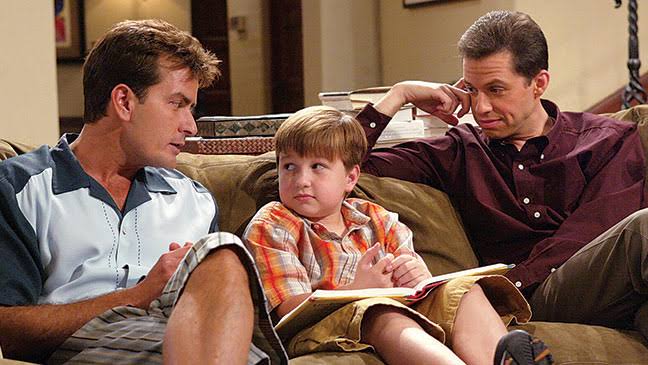
There is something fascinating about Two and a Half Men. On the surface, it is a sitcom about two brothers, a child, a beach house in Malibu and an almost impressive succession of terrible romantic decisions. It is the kind of show you could easily watch for the laughs, occasionally question the characters’ life choices, and move on with your day.
But look a little closer, and there are some rather interesting lessons hiding beneath the sarcasm, questionable parenting and Charlie Harper’s extraordinary commitment to avoiding commitment.
For a show that made a living out of dysfunctional men, it offers some surprisingly useful observations about being one.
Take Charlie Harper, for instance. Charlie is wealthy, successful, confident, charming and seemingly very comfortable in his own skin. He has a beautiful house, a successful career writing jingles and an enviable ability to attract women. By conventional standards, he appears to have figured life out. Except, of course, he hasn’t.
Charlie is perhaps the perfect illustration of the difference between having your life together and simply having the resources to make your life look together. He has financial independence but little emotional discipline. He is comfortable with himself but largely incapable of meaningful self-examination.
And therein lies an important lesson: success in one area of life does not automatically translate into maturity in another.
A man can be accomplished professionally and still be a work in progress personally. He can command a boardroom but struggle to manage a difficult conversation at home. He can make excellent financial decisions and consistently make terrible relationship decisions. The ability to build wealth, lead people and solve complex problems is admirable, but none of these things automatically makes someone a good husband, father, brother, friend or human being.
Charlie is also a reminder that freedom without discipline can become another form of imprisonment. His lifestyle appears enviable until you realise that he is, in many ways, trapped by his own habits. Every relationship is temporary, every problem is someone else’s fault, and every attempt at personal growth is quickly abandoned for something more entertaining.
It turns out that being able to do whatever you want is not necessarily the same as knowing what is worth doing.
Then there is Alan Harper, Charlie’s perpetually struggling brother. If Charlie represents excess, Alan represents the other end of the spectrum: insecurity, resentment, financial dependence and an almost Olympic ability to make himself the victim of circumstances.
Alan is intelligent, educated and, on paper, perfectly capable of building a decent life. Yet he repeatedly sabotages his own opportunities. He blames his ex-wife, his brother, his financial situation and just about everyone else for the things that go wrong in his life.
If Charlie teaches us that freedom needs discipline, Alan teaches us that circumstances should not become a permanent excuse for inaction.
Life is not always fair. Some people get better opportunities, some inherit advantages, and others have to work considerably harder for considerably less. But there is a point at which explaining your circumstances becomes less useful than taking responsibility for changing them.
Perhaps the most important distinction between Charlie and Alan is that neither man seems particularly interested in doing the difficult work of becoming better. One hides behind pleasure; the other hides behind self-pity. Different methods, remarkably similar outcomes.
But perhaps the most interesting character in the show is not either of the brothers. It is Jake.
Jake Harper is, in many ways, the product of the two men around him. He has Charlie’s laid-back attitude and Alan’s tendency to avoid responsibility. Unfortunately, he also inherits some of their less admirable habits. Growing up between a father who is frequently overwhelmed by life and an uncle who seems to have made avoiding adulthood an art form, Jake provides an interesting commentary on the importance of male role models.
It is easy to underestimate the influence of our everyday behaviour on the people around us. The way we treat our colleagues, speak to our partners, handle disagreements, respond to pressure and take responsibility for our mistakes sends a message, whether we intend it to or not.
This applies well beyond fatherhood. Younger colleagues are watching. Siblings are watching. Friends and family members are watching. Sometimes, leadership is less about what we say and more about what people observe us consistently doing.
And then there is the relationship between Charlie and Alan. For all their dysfunction, their relationship offers a rather interesting lesson about brotherhood.
They argue, compete, insult each other and frequently exploit one another’s weaknesses. Yet, underneath all of this, there is a genuine bond. They show up for each other, even when they are not particularly good at demonstrating it.
There is something deeply human about this. Men are not always particularly articulate about affection. Sometimes, care comes disguised as banter, unsolicited advice, practical assistance or simply being present when things fall apart.
But we should be careful not to romanticise emotional unavailability. Being able to joke with someone is not the same as being able to have an honest conversation with them. And while there is nothing wrong with a little friendly ribbing, men should not have to wait for a crisis before expressing vulnerability, asking for help or telling the people they care about that they matter.
There is strength in being dependable, but there is also strength in admitting that you do not have all the answers.
If there is one overarching lesson from Two and a Half Men, it is that being a man is not a finished product. It is a continuous process of figuring things out, getting some things wrong, learning from experience and, hopefully, becoming a little better along the way.
We should aspire to Charlie’s confidence without inheriting his recklessness. Alan’s intelligence without his excuses. Jake’s ability to enjoy life without his reluctance to grow up. And Berta’s self-awareness without needing her level of patience to deal with everyone else.
Perhaps the greatest irony of the show is that the two men who occupy the title are, for much of the series, still trying to figure out how to be men. And that might be the point.
Nobody has it all figured out. Not the executive, the entrepreneur, the father, the husband, the bachelor or the young man just starting out. We all have our blind spots, contradictions and occasional moments of spectacular foolishness.
The trick is not to pretend otherwise. It is to recognise them, take responsibility for them and keep growing.
After all, there is a difference between growing older and growing up. Charlie Harper gave us eleven seasons of evidence.


This is a lovely read. It draws out valuable lessons from *Two and a Half Men* that I might have missed, since I’d only watched it for the laughs. I agree that I’ve been shaped by many influences around me. I can also see how important it is to be mindful of how our actions shape the responses of those around us—and potentially the people they interact with—especially those over whom we have authority. More importantly, we should appreciate that even the best of men is still a man, with room to improve while remaining human. Thank you, Akindamola.